Goal-Space Planning, reproduced
A from-scratch reproduction of Goal-Space Planning with Subgoal Models (JMLR 2024) on FourRooms.
A tabular reproduction of Goal-Space Planning with Subgoal Models (Lo et al., JMLR 2024) on the paper’s FourRooms domain. GSP plans over a small graph of subgoals instead of every state, then hands the resulting values to an ordinary TD learner as a potential-based shaping reward: learning gets faster, and the optimal policy cannot change. Using exact subgoal models isolates what planning and shaping do by themselves, a ceiling for learned models to be measured against.
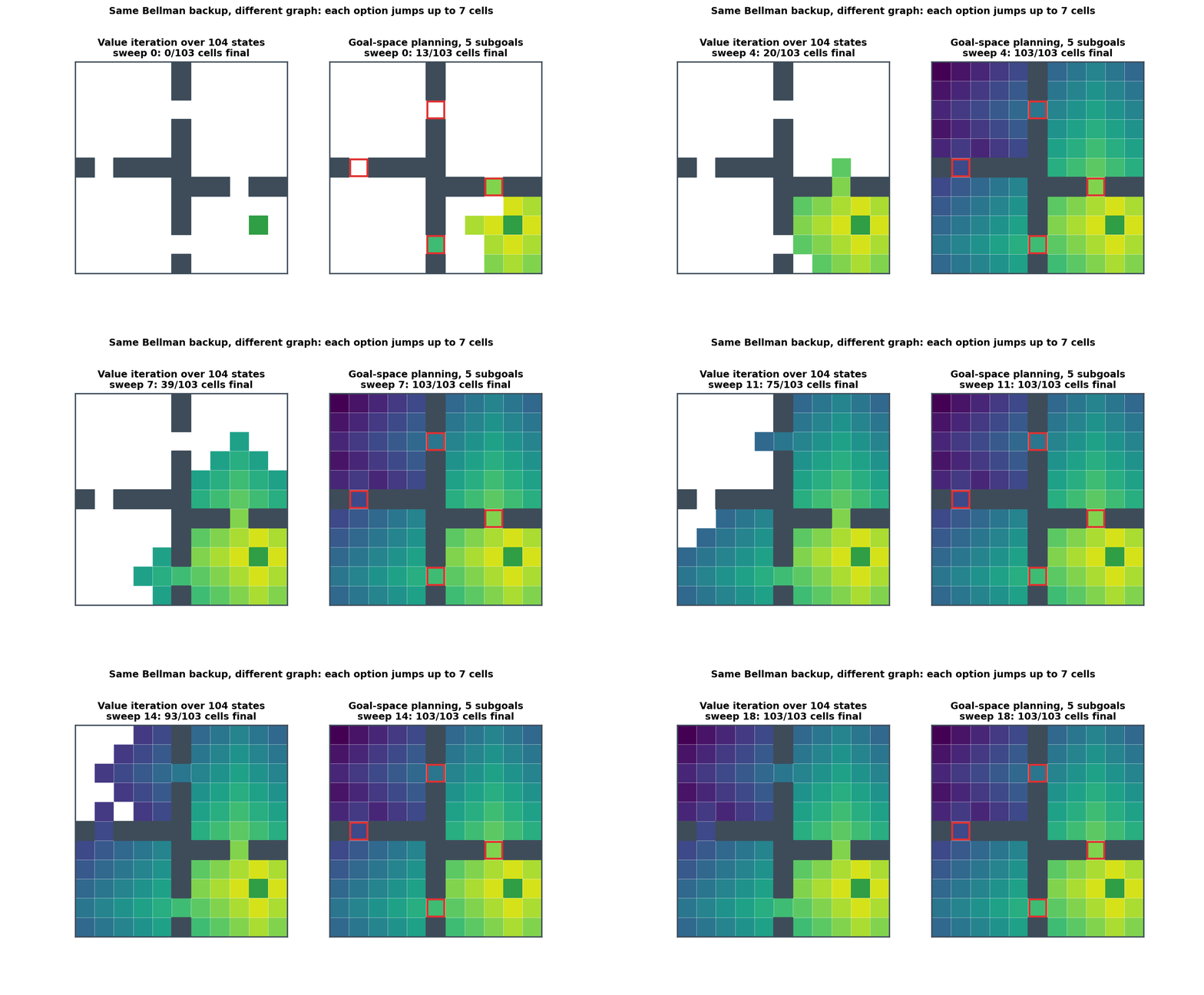
18 → 3value-iteration sweeps, 104 states vs. 5 subgoals
1 → 188state–action pairs updated by one episode, Sarsa(0) vs. GSP + Sarsa(λ)
35 → 18episodes to near-optimal, Sarsa(λ) vs. GSP
18 → 7episodes to re-route around new lava, Sarsa vs. GSP (consistent init.)

Highlights
- One command regenerates all 8 experiments, their figures and the report in about 3 minutes on one CPU core;
gsp checkverifies 10 numerical invariants, and 34 tests cover the rest. - Measured rather than hypothetical: Dyna-Q with 30 planning updates per step still needs 2,732 environment steps for 50 episodes, while GSP needs 1,231 with 30 updates in total.
- With 20% model noise, bootstrapping from the subgoal values collapses (670 steps per episode) while shaping degrades gracefully (27 steps).
- Three open discrepancies with the paper are documented with candidate causes.